
Over the past several weeks, we have talked about marriage, men, women, and sex in marriage. For the final week of By Design, we turned to the questions you asked.
There were four pages of questions, so eight were chosen based on what was most common, on topic, and widely applicable.
What follows is an abridged version of the answers to those eight questions. For the full context and conversation around each one, watch the entire message below or read the full manuscript.
1. What would you say to women in terms of what a man needs in marriage?
Four words:
Peace. Admired. Loyalty. Desired.
A man wants an advocate, not a prosecutor. Talking instead of yelling. Correcting without insulting. Expressing need without tearing him down. He fights battles against the rest of the world all day long. He does not want more at home.
A man wants a cheerleader, not a critic. He wants to hear, “I see your effort. I appreciate you.” Men try harder when they are appreciated, but are tired of being told what they are not doing.
A man wants a teammate, not a rival. Loyalty means being emotionally aligned with him above all others, protecting private issues, correcting him in private rather than disgracing him in public, and remaining faithful even when marriage is in a difficult place.
And a man wants a lover, not a roommate. Sex is an important piece, but it isn’t the act of sex alone. He longs to be desired. Tell him you like him. Tell him you think he looks great. Flirt. Initiate. Let him know that you want him.
If he has peace, loyalty and is admired and desired… you have filled his bucket well.
2. What are men and women “allowed to do” in married sex?
There are three green lights:
- Is it just you two?
- Is it agreeable, or pleasurable for both?
- Does it do any damage to the body?
Those are the three tests.
A threesome? No.
Porn? No.
A full-body massage? If both find it agreeable.
Oral sex? If both find it agreeable.
Choking, burning, or slapping? No.
Is it just you two? Is it agreeable for both? Does it do damage to the body?
3. Is masturbation a sin?
The Bible does not address the issue directly.
The greater concerns are what can become connected to masturbation: lust, pornography, and addiction.
It is clear in the Bible that lust is wrong, and pornography always includes other people. If masturbation includes pornography, it is out of bounds. If it becomes an addictive pattern, you need help.
There is also the matter of shame.
Being overly legalistic about masturbation has left a generation of young men and women feeling guilty about an action that may not be sinful. We do not want to create legalism or shame around a desire that is, in fact, God given.
Shame can lead to hiding, obsessiveness, and despair.
And ultimately, if we focus only on the physical act, we are focusing too small.
The bigger questions are:
How can I use my body to honor God, be self-controlled, and love others around me?
4. Are you born gay? Does that make it OK?
The biblical sexual ethic presented throughout this series is clear: sex is designed for one man and one woman.
Some people describe same-sex attraction as something they have experienced for as long as they can remember. I tend to believe their stories.
But does being born with a particular temptation make acting on it right?
Short answer, no.
Everybody is born with tendencies toward different behaviors, and temptations fall unequally.
My natural inclination does not automatically determine what is righteous. Every day, I choose faithfulness to my wife over other possibilities.
The distinction is simple:
The sin is not in the temptation, it is in the action.
Every day, in a hundred ways, we choose righteousness over sin.
5. What do you think of the emerging gender ideology? Is being trans a moral issue?
There is an important distinction being made today between sex and what modern culture often calls gender.
Sex is biology. Gender is often described as a spectrum of social norms: clothes, hair, vocations, colors, interests, and what someone feels like internally.
The biblical perspective is simple:
God made us male and female and we can’t change it. We don’t choose.
At the same time, it is completely OK to break across cultural gender norms.
A boy who likes ballet and pink is still a boy who likes ballet and pink. A girl who loves motocross is still a girl who loves motocross.
It is totally OK to break across gender norms and like something typical of the other sex. It just does not change what sex you are.
The Bible does not directly address transgender people in the way we discuss the issue today.
And our response as Christians should be:
High compassion.
We should not target transgender people as pariahs, but as loved by God.
I wish that transgender people would say that Christians are among the most kind, tender, and approachable peoplethey know and that our love is notable to them.
I hope that we can be that kind of people.
6. What does the Bible say about intersex people?
Not a lot.
There are no examples of intersex people in the Bible, and Scripture does not give specific instructions for every situation.
Our general approach should be one of:
Compassion and kindness.
This is less of a moral question and more of a pragmatic, case-by-case situation.
Start with loving a person, listen to their story and it can keep you out of a lot of trouble.
7. I am “asexual” — with no sexual desire at all. What is the biblical view of that?
Being asexual is not really a moral question.
Celibacy is perfectly moral and is even something the apostle Paul speaks positively about.
If you choose to focus your life on honoring God and ministry and sex is not a distraction, this can be a strategic advantage for your life.
There may be biological, health, hormonal, or past-experience reasons behind a lack of sexual desire that someone could choose to explore with counselors or doctors.
But there is:
No moral reason compelling you to do so.
8. When is divorce and remarriage appropriate?
There are two reasons directly from the biblical text and one that many pastors reason to from the text:
Adultery.
Abandonment.
Abuse.
But in every case:
Divorce is not Plan A.
God designed marriage to be permanent. Divorce rips at people’s hearts. It brings grief and affects families, children, and communities.
At the same time, there are circumstances where divorce may be the least bad option you are faced with.
When it comes to remarriage, there is not a simple formula.
Some important questions are:
What was the original reason for divorce?
How long has it been?
Is there any chance for reconciliation?
How has God changed you in the meantime?
What have you learned?
There is not a formula. These decisions involve the corporate volume of Scripture, character, the nature of marriage, and more.
It is complicated. And there is no clear system for it. But we follow the winds of the Spirit and the mind of Christ as we ask key questions.
It’s All By Design
After eight questions, it all comes back to the word that has shaped this entire series:
Design.
God’s design for marriage isn’t a cage, it’s a kindness.
His design for you as a man or a woman isn’t a stereotype, it’s an invitation.
His design for sex isn’t shame, it’s a gift with guardrails, because the things worth having are always worth protecting.
And when that design gets broken, God’s answer has never been “get out.”
It’s always been “come back.”
You were not an accident. Your body was not a mistake. It’s all by design. And the God who designed it isn’t finished with any of us yet.
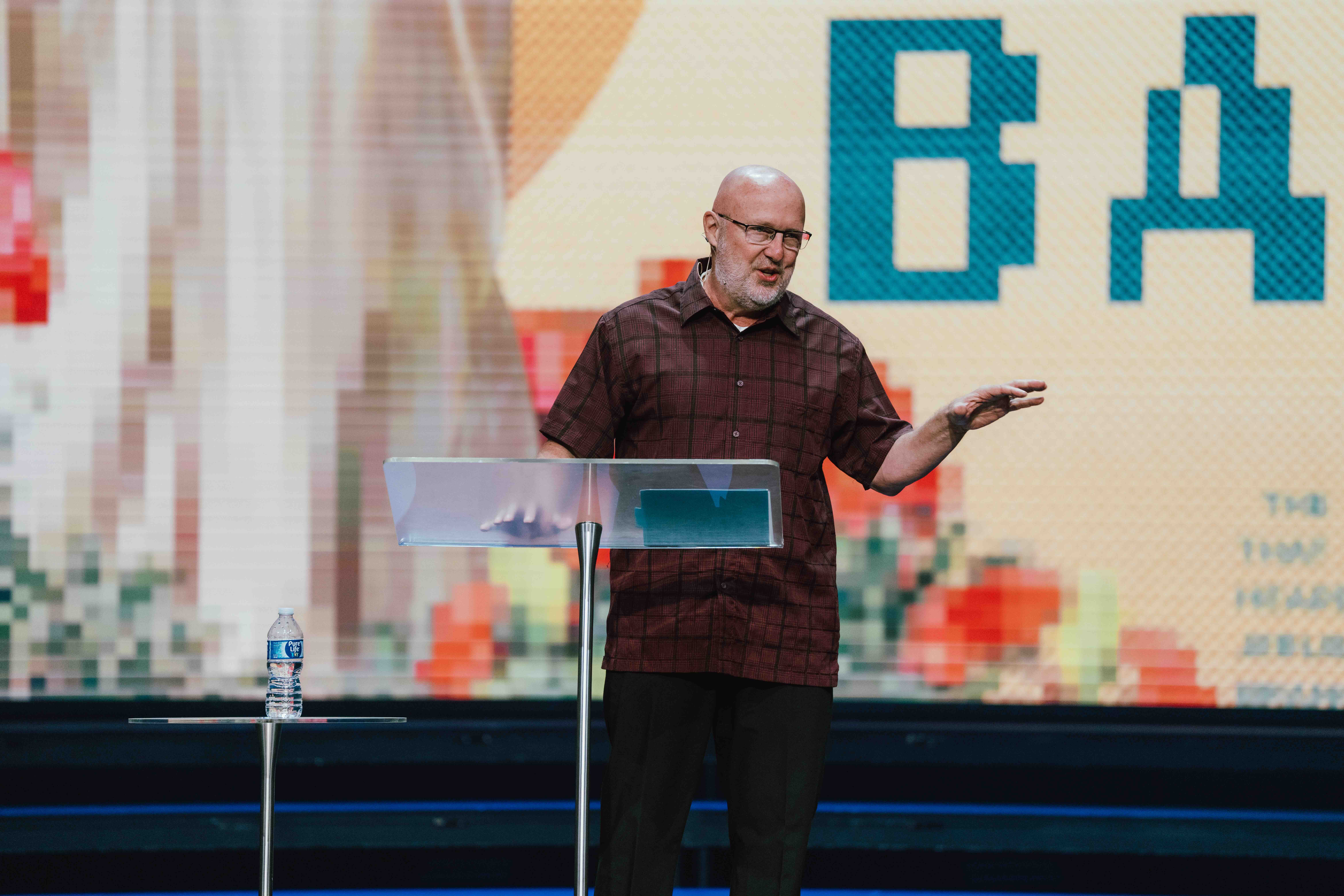
Message recap adapted from the September 6, 2026, message by Minister Mark Ashton.


Download Our App
Grow in your faith and build daily habits using our app.